Articles
Discover articles and insights

Who Gets the Most Powerful AI? Four Labs Just Gave Four Answers
In one week, Anthropic restricted its Mythos model to a security consortium, Meta launched its first proprietary model, Google released Gemma 4 under Apache 2.0, and OpenAI introduced identity-verified tiered access for GPT-5.4-Cyber. The four decisions represent four incompatible strategies for distributing frontier AI, and the infrastructure that abstracts away provider differences becomes the critical enterprise investment.

Four AI Labs Split on Model Access This Week
Five stories from the week of April 7-14, 2026, covering how Anthropic, OpenAI, Meta, and Google each chose fundamentally different AI model access strategies — from restricted security consortiums to full Apache 2.0 open source.

AI Agents Ship Payment Protocols While Governance Stalls
Three AI agent payment protocols — x402, Stripe's Machine Payments Protocol, and Google's AP2 — have emerged in rapid succession, each backed by major technology and financial companies. The speed of protocol development is outpacing the governance, identity, and accountability standards that enterprises need before deploying autonomous agent commerce at scale.

19 AI Laws in Two Weeks as Agent Governance Converges
Nineteen AI bills became law across U.S. states in two weeks, Microsoft released an open-source toolkit covering all ten OWASP agentic AI risks, and DARPA announced a program to formalize agent-to-agent communication. The convergence signals that governance infrastructure for AI agents is arriving from multiple directions simultaneously, with enforcement deadlines starting in mid-2026.

Microsoft Open-Sources AI Agent Governance Toolkit
Microsoft released a seven-package, MIT-licensed toolkit that addresses all 10 OWASP agentic AI risks with sub-millisecond policy enforcement.

49% of Organizations Can’t See Their AI Agent Traffic
Darktrace’s 2026 cybersecurity report finds nearly half of organizations cannot monitor their AI agents, while most deployed agents bypassed security review.

Why AI Cybersecurity Needs Quantum-Safe Signatures Now
Every digital signature used today will break under quantum computing. A review of the Apoth3osis QSFA system shows how ML-DSA-65 and formally verified code create file attestations designed to survive the post-quantum era.

AI DevOps: Give Your Agents Eyes on Every Codebase
GitHub Repo Browser - Read Only gives AI agents full visibility into GitHub repositories through 13 structured, read-only actions -- browsing files, commits, branches, and code -- while making it structurally impossible to modify anything.

Congress Restricts AI Supply Chain Access for Defense Manufacturers
The 2026 NDAA bans AI from DeepSeek and covered-nation entities in defense contracts, with False Claims Act liability cascading through the full supplier chain.

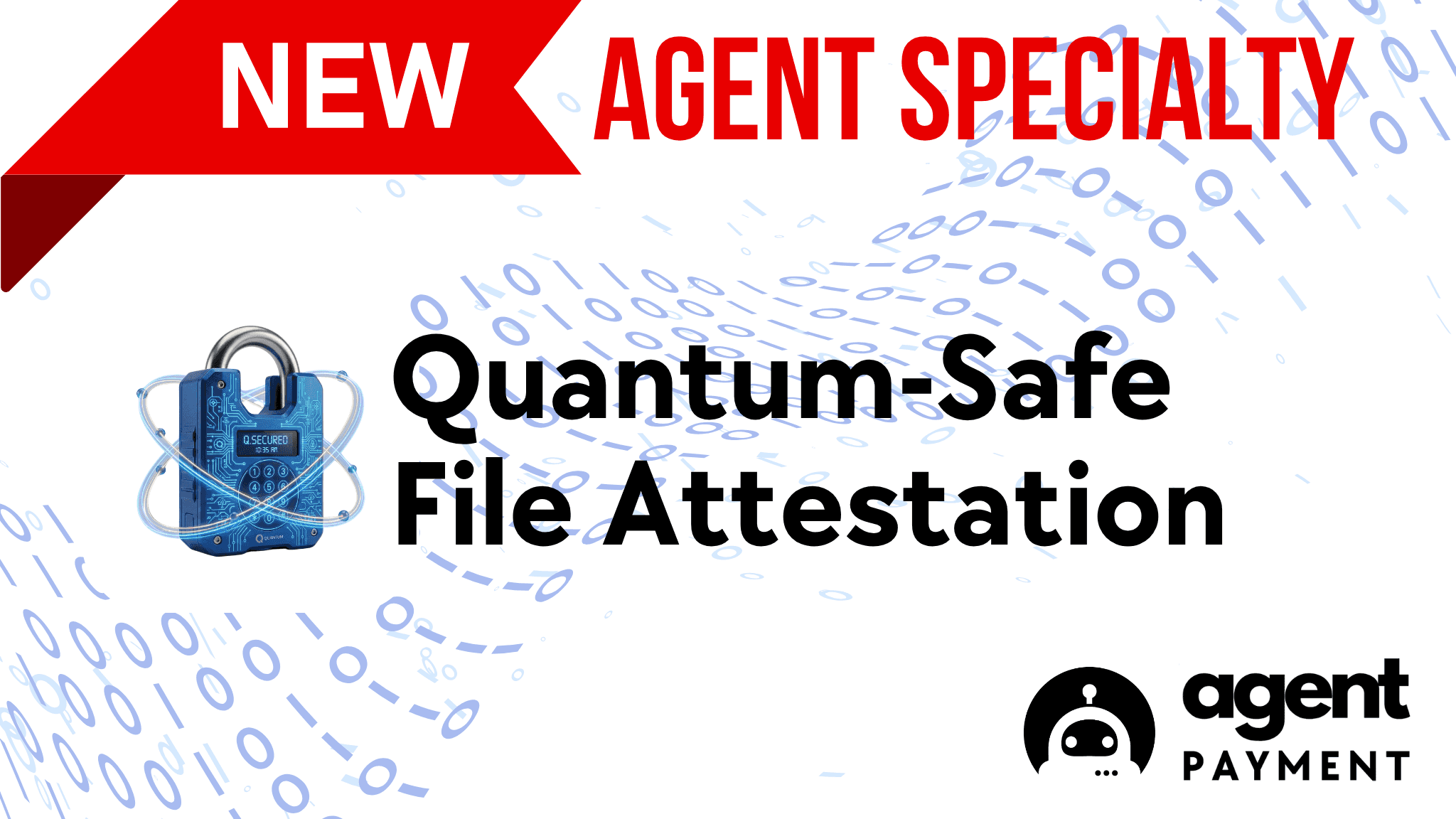
Quantum-Safe File Attestation Launches on AgentPMT: Post-Quantum Proof for Every File
AgentPMT adds Quantum-Safe File Attestation to its marketplace, giving AI agents the ability to sign and verify files using ML-DSA-65 post-quantum cryptography through a hardware security module.

Public Safety AI: DOGE Deploys Tools Across Federal Agencies
DOGE deployed multiple government AI systems across federal agencies for record scanning, workforce reduction, and employee surveillance, drawing Privacy Act lawsuits and conflict-of-interest scrutiny.

AI DevOps Agents Handle 35,000 Incidents a Month. Most IT Teams Can't Deploy Even One.
All three hyperscalers shipped production-grade AI agents for IT operations in Q1 2026, proving the technology works at scale — but only 11% of enterprises have agents in production because most lack the governance infrastructure, cross-platform audit trails, and spending controls required to let autonomous software operate safely.

Healthcare AI Agents Stall at 3% Despite $440 Billion in Administrative Waste
Every major tech vendor launched healthcare AI agents at HIMSS26, yet Microsoft research shows only 3 percent of health systems have deployed agents in live workflows. The governance infrastructure gap keeps the other 97 percent stuck between pilot and production.

Agentic Payments Went Live in Q1. Fraud Rules Didn’t.
Five major payment networks shipped competing agent payment systems in Q1 2026, each with incompatible identity, fraud, and settlement models. With no unified standard, no regulatory guidance, and a party model that has ballooned from five participants to eleven, the real challenge is not whether agents can make payments — it is whether anyone can govern them.

The Agent Skills Supply Chain Is Already Compromised. The Architecture Was the Problem.
The first mass supply chain attack on AI agent skill registries exposed a 13.4 percent critical vulnerability rate across ClawHub. The failure was architectural — trust by default, no identity verification, no scoped authorization. The answer was always better infrastructure, not more regulation.

79% of Companies Can't See What Their AI Agents Are Doing
AI agents gained computer use, credit cards, and trust infrastructure in the same week — while most enterprises still can't track what their agents are doing.

AI Agents Got Real Wallets. 37% of Tools Have Flaws.
AI agent payments went live across five competing architectures in Q1 2026, but 37% of agent marketplace skills have security flaws—making governance the most critical infrastructure gap in agentic commerce.

The $110 Billion Week That Made Model Choice Political
OpenAI closed the largest private funding round in history while the Pentagon blacklisted its top competitor. AI model provider choice now carries political, funding, and distribution risk.

The Integration Layer Is the New Lock-In
Four companies shipped four agent connector systems in three weeks. None interoperate. The integration layer, not the model, is the new lock-in.

The Week Agent Infrastructure Went Federal
NIST launched the AI Agent Standards Initiative. Docker found 60% of enterprises run agents in production. Slack, Atlassian, Cisco, and Microsoft shipped agent infrastructure the same week. The model race is over — the infrastructure race just started.

88% Hit: The Agent Security Reckoning Has Arrived
88% of organizations report AI agent security incidents as MCP supply chain attacks move from theoretical to proven. The governance response is forming — but the crisis is already here.

$2.5B, 4% of GitHub, and the MCP Governance Gap
Claude Code crossed $2.5B in revenue. Four MCP milestones shipped in five days. Cisco calls MCP 'woefully insecure.' The governance gap is the story.

The AI Checkout Wars Are Here. Consumer Trust Isn't.
Five tech giants launched AI shopping agents in three weeks. Consumer research says only 17% would let one complete a purchase — the trust gap defines who wins.

Three Million AI Agents Have No ID. The Payment Networks Are Fixing That.
Gravitee's survey of 900 executives found 3 million AI agents active across US and UK enterprises — nearly half operating without identity management, security oversight, or audit logging. The organizations solving agent identity now will run agents in production. Everyone else will join the 40% of agentic projects Gartner predicts will be scrapped by 2027.

Designing Agent Budgets On-Chain
Smart contracts can enforce agent spending limits with cryptographic certainty. Here is how allowance patterns, time-locked budgets, and delegation mechanisms give you guarantees that off-chain systems cannot.

Stop Grading Your Agents Like a Homework Assignment
Accuracy-only evaluation is the most dangerous metric in your agent stack. A multi-dimensional eval framework covering cost, safety, reliability, speed, and correctness is essential to catch regressions before they reach production. This article covers how to build an eval harness, design test datasets including a "bad days corpus," assert on invariants rather than exact outputs, and establish the organizational practices that make evaluation stick.

Approve Once, Enforce Everywhere
When every team manages its own agent tool access, the result is shadow integrations, credential sprawl, and inconsistent security posture. A single central tool policy -- approve the tool once, enforce the policy everywhere -- covers allow-lists, spend caps, credential management, data classification, version pinning, and audit requirements.

Budget Scoping for Multi-Agent Systems

Flat spending caps don't work when agents operate across projects, vendors, and time windows simultaneously. Here are the specific scoping dimensions — per-agent, per-workflow, per-vendor, per-time-window, and composite — that make agent budgets enforceable, and what happens when each one runs dry.

MCP for Busy Engineers: Adopt It Safely
The Model Context Protocol is becoming the standard way agents connect to tools -- here is the mental model, the architecture, and the adoption path that keeps you out of trouble.

The Approval Workflow Nobody Wants to Design
Approval fatigue is a bigger risk than no approvals at all. Here is how to design human-in-the-loop workflows that actually govern -- using caps, allow-lists, rich approval packets, and escalation design.

It's Time To Give Your Agent An Identity
Replace API keys and passwords with crytographically secured signatures that prove an agent's authority to transact without revealing credentials. Free, opensource, and completely decentralized.

When Your MCP Tools Become the Threat Vector
MCP servers are installable dependencies, and they carry every supply chain risk that npm and PyPI taught us the hard way. Here's what's already going wrong.

What Xcode MCP Support Signals for Tooling
Every major IDE now speaks MCP natively. When the tool developers use eight hours a day becomes an agent execution surface, the market for MCP tools changes shape entirely.

Internal MCP Servers: Agent Access Without Data Exposure
How to architect internal MCP servers that connect agents to production databases, CRMs, and HR systems while keeping classified data inside the boundary where it belongs.

HTTP 402 Is Back: Building Pay-Per-Call APIs for Agents
The HTTP status code reserved since 1997 finally has a job. Here is how x402 turns a 30-year placeholder into the payment layer for autonomous agents -- and what it means for every API that wants to get paid at machine speed.

Agent Payments Without Chargebacks
Stablecoin payments settle in 200 milliseconds with no reversal mechanism. Credit-based refund systems, smart contract escrow, and proof-of-delivery primitives are replacing the chargeback safety net -- and they work better for agent commerce than card networks ever did.

Government and Enterprise MCP Adoption
How regulated organizations are reconciling MCP's install-once simplicity with FedRAMP controls, EU AI Act obligations, and enterprise change management that was never designed for autonomous systems.

Twenty-Four Days Until Washington Decides How Your AI Agents Can Operate
The Commerce Department's March 11 report on state AI laws, NIST's March 9 comment deadline on agent security, and Anthropic's $20M political bet are converging into the most consequential regulatory month for AI agents since the technology went mainstream.

Agentic GDP Hit $470M. Transactions Fell 92%.
Blockchain agent infrastructure shipped fast in early 2026. On-chain identities, wallets, and commerce protocols are live. But x402 transactions cratered 92% from December — proving wallets without governance don't produce sustained commerce.

Agents Are Getting Wallets. Most Companies Still Can't Track What Their Agents Did Yesterday.
AgentPMT has enabled agents to make secure payments with budget controls and credential isolation since day one. This week, Stripe and Coinbase launched their own agent payment infrastructure — validating what AgentPMT built while Deloitte's survey of 3,235 leaders found only 21% have mature governance. The gap between agent capability and agent accountability is 2026's defining infrastructure risk.

Agent Incident Response Before 2 AM
A practical guide to building incident response runbooks for AI agent systems, covering kill switches with tiered freeze scopes, pre-designed containment procedures, postmortem-to-guardrail pipelines, and the unique challenges of containing systems that actively reason around your defenses.

The $15 Trillion War for AI Shopping Agents

Google, OpenAI, and Amazon are racing to control where AI agents shop. The winner captures $15 trillion in B2B spending and trillions more in consumer commerce.

The Agentic AI Security Crisis Is Here
48% of security professionals see AI agents as the top 2026 attack vector. The federal government just published an RFI on agent security. Here's what your deployment strategy is missing.
Start automating your workflows today.
Create custom workflows for your business, free to start.
No credit card required.