Banking, insurance, private equity/VC, accounting, real estate
Financial services firms process more structured data per employee than nearly any other industry. That density makes finance one of the highest-ROI environments for AI agent deployment — every automated decision, reconciliation, or compliance check compounds across millions of daily transactions.
Real-time fraud detection has moved beyond rule-based systems. AI agents at firms like JPMorgan Chase and Mastercard analyze transaction patterns, device fingerprints, and behavioral signals to flag anomalies within milliseconds. Mastercard's Decision Intelligence platform processes billions of transactions per year, reducing false positives by up to 50% while catching fraud that static rules miss entirely.
Know Your Customer and Anti-Money Laundering workflows are among the most manually intensive processes in banking. AI agents now handle document verification, sanctions screening, beneficial ownership resolution, and suspicious activity report generation. ComplyAdvantage and Jumio deploy agents that reduce KYC onboarding time from days to minutes while maintaining audit-grade documentation.
Quantitative trading firms have used automated systems for decades, but the current generation of AI agents handles tasks that previously required human judgment — interpreting earnings calls, scanning regulatory filings, and adjusting positions based on macroeconomic signals. Two Sigma and Citadel deploy NLP agents that parse thousands of documents per hour, extracting alpha signals from unstructured text.
AI agents evaluate creditworthiness using alternative data sources — payment histories, cash flow patterns, business metrics — that traditional models ignore. Upstart's AI-driven underwriting approves 27% more borrowers than conventional models at the same loss rate. Agents handle the full pipeline: application intake, document extraction, risk scoring, and conditional approval generation.
Robo-advisory platforms like Betterment and Wealthfront have automated portfolio rebalancing, tax-loss harvesting, and cash management for millions of accounts. Behind the consumer-facing products, AI agents handle trade execution, compliance checks, and performance reporting at scale that would be impossible with human advisors alone.
Regulatory pressure, margin compression, and client expectations are converging. The firms deploying AI agents across compliance, operations, and client service are not just cutting costs — they are processing more volume with fewer errors and faster turnaround than competitors still running manual workflows.








Five major developments in AI agent payments and governance — from the x402 Foundation launch to the first regulated agent transaction — show an industry building faster than its safeguards.

Salesforce data shows AI agents influenced $262 billion in 2025 holiday sales, and banks whose products aren't machine-readable risk disappearing from agent-driven checkout.

Visa and Mastercard are deploying production payment systems for autonomous AI agents, with Visa's Trusted Agent Protocol going live through Ramp and Mastercard's Agent Pay completing its first autonomous transaction in Hong Kong through HSBC, as financial services firms face converging regulatory deadlines from Colorado, the EU, and the NAIC.

Visa and Mastercard are shipping production payment infrastructure that lets AI agents initiate and complete financial transactions autonomously, with live deployments across corporate and consumer banking.

American use of AI for wealth management jumped from 10 percent to 55 percent in a single year, outpacing the advisory industry's ability to respond.

NAIC 12-state pilot examines how insurers use AI for total-loss determinations, damage assessments, and claims payouts, with nationwide rollout planned for November 2026.

Eighty-two percent of insurance carriers use AI tools in operations, but only 12 percent have achieved mature capabilities, according to a Sedgwick report analyzed by Claims Journal.

Every digital signature used today will break under quantum computing. A review of the Apoth3osis QSFA system shows how ML-DSA-65 and formally verified code create file attestations designed to survive the post-quantum era.

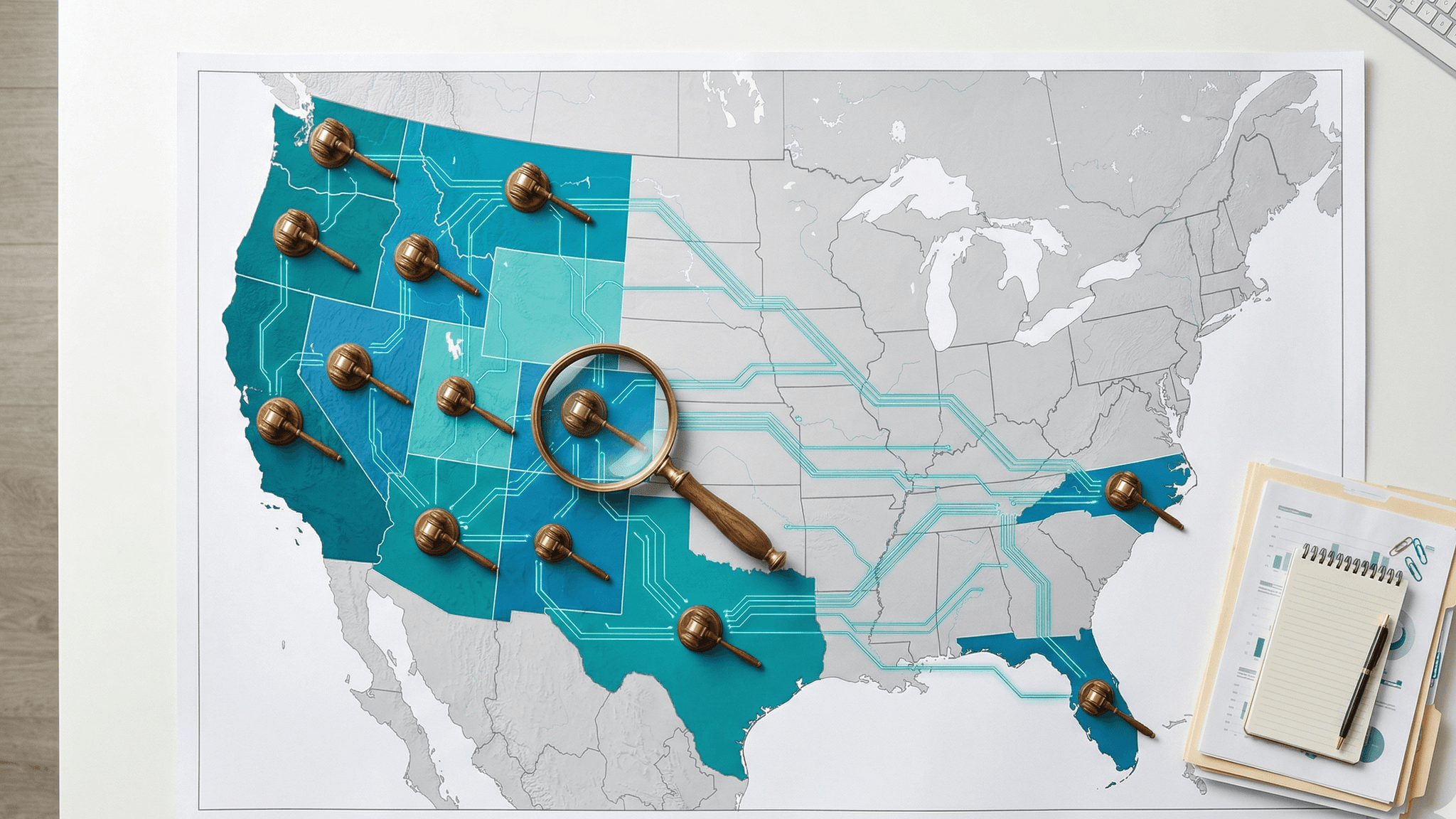
AgentPMT now offers Real Estate Sales Leasing and Valuations, a nine-action real estate AI tool by Apoth3osis that gives AI agents programmatic access to U.S. property records, sale and rental listings, valuations, rent estimates, and market statistics at 25 credits per action.

AgentPMT launches the MongoDB Connector, a 25-action tool that gives autonomous AI agents direct, authenticated access to MongoDB databases -- including queries, aggregations, vector search, index management, and bulk operations -- at 5 credits per call.

AgentPMT announces Trading Signal Analysis -- a multi-indicator technical analysis tool for stocks and crypto that delivers structured signal detection, strategy backtesting, and downloadable performance charts at 6 credits per call.

AgentPMT adds Quantum-Safe File Attestation to its marketplace, giving AI agents the ability to sign and verify files using ML-DSA-65 post-quantum cryptography through a hardware security module.

Visa, Mastercard, and crypto networks are racing to build payment infrastructure for autonomous AI agents, but Colorado's AI Act, the EU AI Act, and federal guidance will determine how much autonomy those agents actually get — and the identity verification gap between the two tracks remains unsolved.

Financial institutions are moving AI spending past chatbots into autonomous agents that handle compliance workflows, treasury operations, and payment processing in real time.

Coinbase, BNB Chain, and Nvidia are building identity and transaction infrastructure for AI agents operating outside traditional banking, while regulators have yet to address how autonomous systems should be identified in financial services.

Colorado's AI Act and expanding state-level regulations are forcing financial services firms to build unified regtech AI infrastructure for lending compliance across multiple jurisdictions.

Visa has completed hundreds of secure AI-agent-initiated transactions with over 100 global partners, proving that card network infrastructure for autonomous agent commerce is operational and heading toward mainstream adoption by the 2026 holiday season.

Fiserv is integrating Mastercard's Agent Pay Acceptance Framework into its merchant platform, routing AI-initiated purchases through existing card processing infrastructure across Clover POS and eCommerce channels.

AI agents crossed from pilot to production in accounting and financial services in Q1 2026, backed by over $175 million in dedicated funding from Basis and Accrual, plus an Intuit-Anthropic MCP partnership and the first regulated AI agent payment by Santander and Mastercard. But the governance, compliance, and auditability frameworks these agents need to operate in regulated environments are trailing behind deployment pace, with the EU AI Act high-risk deadline just five months away.

Five major payment networks shipped competing agent payment systems in Q1 2026, each with incompatible identity, fraud, and settlement models. With no unified standard, no regulatory guidance, and a party model that has ballooned from five participants to eleven, the real challenge is not whether agents can make payments — it is whether anyone can govern them.